
Cabbage soup has been a staple in households across Europe for centuries, particularly in Eastern European cuisine where it was known as a peasant's feast. The humble cabbage, once considered food for the poor, transformed into a nourishing meal that could feed a family for days. This tradition traveled across continents with immigrants who cherished the economical yet deeply satisfying nature of the dish. The slow simmering allows flavors to meld beautifully, creating a broth that's both light and substantial. Throughout history, this soup has represented resilience and resourcefulness in home cooking, proving that the simplest ingredients often create the most memorable meals.
Why You'll Love It
-
Packed with nutrient-rich vegetables that make you feel good
-
Simmers to perfection, filling your home with comforting aromas
-
Uses simple, affordable ingredients you likely already have
-
Freezes beautifully for easy meals throughout the week
-
Can be adapted to whatever vegetables are in season
"This soup tastes like my grandmother's kitchen - comforting, familiar, and absolutely delicious."
Essential Ingredient Guide
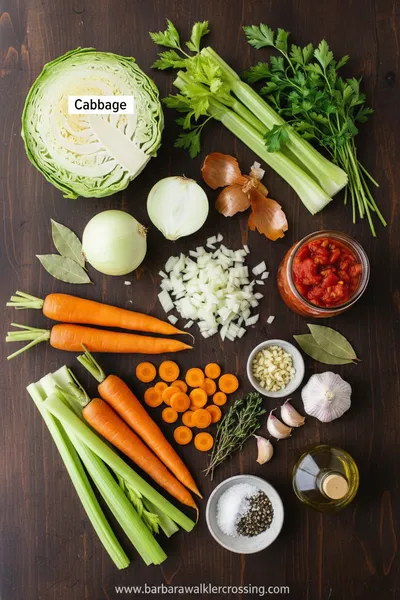
- Green cabbage: The heart of this soup - look for a firm head with crisp, vibrant leaves. It adds wonderful texture and absorbs the broth's flavors beautifully as it cooks.
- Carrots: Adds natural sweetness and earthy tones. I like to cut them into coins that hold their shape but still soften nicely in the broth.
- Celery: Provides that subtle savory backbone that makes the broth taste rich and developed, even without meat.
- Potatoes: Yukon gold potatoes work beautifully here - they break down slightly to thicken the broth while still holding their shape.
- Tomatoes: Canned diced tomatoes give the soup body and a gentle acidity that balances the sweetness of the vegetables.
- Bay leaves: Two dried bay leaves add that subtle herbal note that makes the soup taste like it's been simmering for hours.
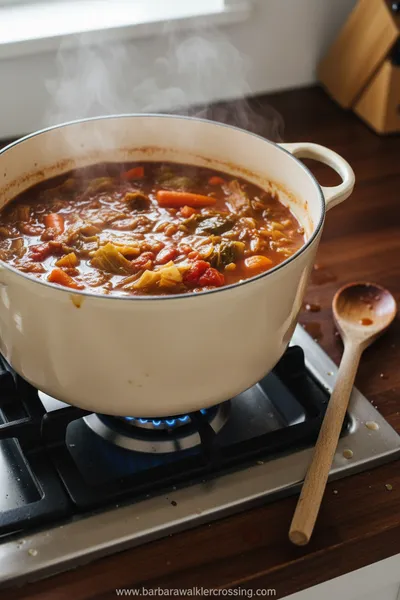
Complete Cooking Process
-
Ingredient Readiness:
All your vegetables should be chopped and ready before you start cooking. The cabbage gets sliced into ribbons, carrots into coins, celery into small pieces. Honestly, taking these few minutes to prep everything makes the cooking process flow so smoothly.
-
Flavor Development:
Sautéing the onions, carrots, and celery first builds the foundation. That gentle sizzle as they soften releases their natural sugars and creates the base flavor for your broth. I always stand there for a moment, just enjoying that warm, savory scent filling the kitchen.
-
Texture Control:
Adding the cabbage and potatoes at the right time ensures everything cooks evenly. The cabbage should wilt but still have some bite, while the potatoes become tender but not mushy. It's all about timing and gentle heat.
-
Finishing Touches:
The final seasoning adjustment makes all the difference. Taste the broth after everything has simmered together - sometimes it needs just a pinch more salt or a grind of pepper to bring all the flavors into harmony.
-
Serving Timing:
This soup is best when it's had a little time to rest after cooking. Letting it sit for 10-15 minutes allows the flavors to settle and marry together perfectly.
-
Don't rush the initial sauté - let the vegetables soften properly for maximum flavor
-
Use a good quality vegetable broth for the best tasting soup base
-
Slice the cabbage against the grain for the most tender texture
-
Taste and adjust seasoning at the end - soups often need more salt than you think
Pro Tips
I remember making this soup for the first time when my daughter was sick with a cold. She was maybe seven years old, wrapped in a blanket on the couch, and the whole house smelled like comfort. When I brought her a bowl, she took one spoonful and her eyes lit up. 'It smells like being better,' she said. That moment stuck with me.
Over the years, I've made this soup through all seasons - for busy weeknights, for comforting weekend lunches, for times when someone needed a little extra care. It's one of those recipes that adapts to whatever you have on hand, and it always feels like it was exactly what you needed.

The essence of the dish:
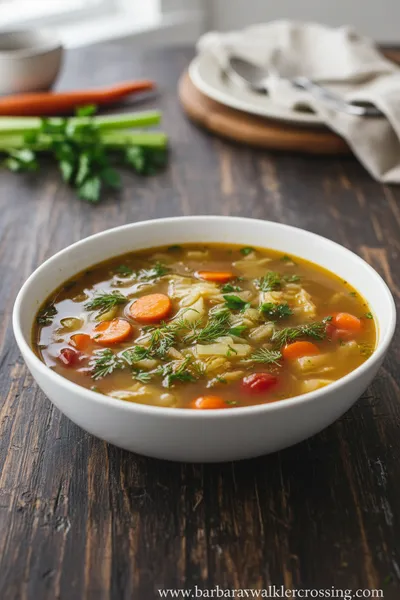
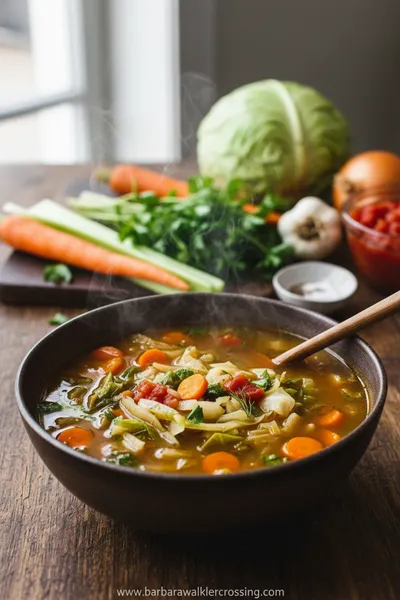
This soup is about transformation - taking humble, inexpensive vegetables and turning them into something truly nourishing. The cabbage becomes silky soft, the potatoes break down slightly to thicken the broth, and the carrots add little bursts of sweetness. It's the kind of meal that makes you feel cared for, from the first aroma that fills your kitchen to the last spoonful.
A fun fact or historical angle:
Cabbage soup was often called 'peasant food' because cabbage was one of the few vegetables that could be stored through winter. Families would make huge pots that could be reheated for days, with the flavors actually improving each time.
Flavor or sensory focus:
What you'll notice first is the gentle earthiness of the vegetables, followed by the way the broth feels both light and satisfying. The cabbage leaves become almost translucent as they cook, soaking up all the flavors around them while still maintaining their delicate structure.
You Must Know
-
This soup improves with time - make it a day ahead if possible
-
Don't overcook the vegetables - they should retain some texture
-
The soup will thicken as it cools - add a little water when reheating
-
Freeze individual portions for quick, healthy meals anytime
Frequently Asked Questions
→ Can I add other vegetables to this soup?
Absolutely. Green beans, peas, corn, or even some chopped spinach would work beautifully. Just adjust cooking times accordingly - add delicate greens at the end.
→ How long does this soup keep in the refrigerator?
It will keep well for 4-5 days in an airtight container. The flavors actually improve over the first couple of days.
→ Can I freeze cabbage soup?
Yes, it freezes beautifully for up to 3 months. I like to freeze it in individual portions for easy lunches or dinners.
→ What's the best way to reheat the soup?
Gently reheat on the stovetop over medium-low heat, stirring occasionally. You may need to add a little water as it will thicken when refrigerated.
→ Can I make this soup in a slow cooker?
Definitely. Sauté the vegetables first for best flavor, then transfer everything to the slow cooker and cook on low for 6-8 hours.
→ What kind of cabbage works best?
Regular green cabbage is perfect, but savoy cabbage would work nicely too with its more delicate leaves.
Nutrition Facts
per serving
145
Calories
4g
Protein
24g
Carbs
5g
Fat
Taste Profile
Earthy, savory, and gently sweet from the vegetables
Ingredient Substitutions
Don't have an ingredient? Try these alternatives
Will add richer flavor but won't be vegetarian
Adds different flavor profile but similar texture
Recipe Variations
Try these delicious twists on the original
Italian-Style Cabbage Soup
Add cannellini beans, Italian seasoning, and finish with a drizzle of olive oil and grated Parmesan
Hearty Cabbage and Beef Sausage Soup
Add sliced beef sausage during the last 10 minutes of cooking for a meatier version
Common Mistakes to Avoid
Learn from others' mistakes for perfect results
- Overcrowding the pot with cabbage before it wilts down
- Boiling too vigorously and making vegetables mushy
- Not tasting and adjusting seasoning at the end
- Adding too much salt initially - better to add gradually
Meal Prep & Storage
Make Ahead Tips
This soup actually tastes better made a day ahead. The flavors have time to develop and meld together beautifully. Just reheat gently before serving.
Leftover Ideas
Leftovers reheat beautifully. The soup may thicken in the refrigerator, so add a little water when reheating. Taste and adjust seasoning if needed.
Perfect Pairings
Serve this with...
Cooking Timeline
Chop all vegetables and gather ingredients
Sauté onions, carrots, and celery until softened
Add remaining ingredients and bring to boil
Simmer until vegetables are tender
Adjust seasoning and let rest before serving
Best Cabbage Soup Recipe
Hearty cabbage soup packed with vegetables creates the most comforting, nourishing meal that feels like a warm hug from the inside out. The gentle simmering fills the kitchen with memories of simpler times.
Timing
Prep Time
20 Minutes
Cook Time
40 Minutes
Total Time
60 Minutes
Recipe Details
Ingredients
Soup Base
-
01
2 tablespoons olive oil
-
02
1 large onion, chopped
-
03
3 carrots, sliced into coins
-
04
3 celery stalks, chopped
-
05
3 cloves garlic, minced
-
06
8 cups vegetable broth
Main Vegetables
-
01
1 small green cabbage (about 2 lbs), cored and sliced
-
02
2 medium potatoes, peeled and cubed
-
03
1 can (14.5 oz) diced tomatoes
-
04
2 bay leaves
Seasonings
-
01
1 teaspoon dried thyme
-
02
1 teaspoon salt (plus more to taste)
-
03
½ teaspoon black pepper
-
04
1 tablespoon tomato paste
-
05
2 tablespoons fresh parsley, chopped
Instructions
Heat the olive oil in a large pot over medium heat. Add the chopped onion, carrots, and celery. Sauté for about 8-10 minutes, until the vegetables have softened and the onion is translucent. Add the minced garlic and cook for another minute until fragrant.
Stir in the tomato paste and cook for another minute to deepen the flavor. Then add the vegetable broth, scraping up any browned bits from the bottom of the pot.
Add the sliced cabbage, cubed potatoes, diced tomatoes with their juice, bay leaves, thyme, salt, and pepper. Bring the soup to a boil, then reduce heat to low and simmer for 25-30 minutes, until the potatoes are tender and the cabbage is soft.
Remove the bay leaves and taste the soup. Adjust seasoning with additional salt and pepper if needed. Stir in the fresh parsley just before serving.
Let the soup rest for 10 minutes off the heat before serving. This allows the flavors to meld together beautifully. Serve hot with crusty bread for dipping.
Notes & Tips
-
1
The soup will thicken as it cools - add a little water when reheating if needed
-
2
This recipe freezes beautifully for up to 3 months
-
3
For extra flavor, you can add a Parmesan rind while simmering (remove before serving)
-
4
Leftovers taste even better the next day as flavors continue to develop

Tools You'll Need
-
Large stockpot or Dutch oven
-
Cutting board
-
Sharp knife
-
Measuring cups and spoons
-
Wooden spoon
-
Ladle
Must-Know Tips
-
Don't overcrowd the vegetables when sautéing - cook in batches if necessary
-
Let the soup simmer gently rather than boil vigorously to preserve vegetable texture
-
Taste and adjust seasoning at the end - soups often need more salt than expected
Professional Secrets
-
Sauté vegetables until properly softened - this builds flavor foundation
-
Add cabbage in stages if your pot is small - it wilts down significantly
-
Use high-quality vegetable broth for the best tasting soup base

Recipe by
Isabella MooreCelebrating life with flavor 🎉🍽️ Creating magical seasonal dishes full of warmth, joy, and delicious taste ✨
Get Delicious Recipes Weekly
Join 25,000+ home cooks getting our best recipes straight to their inbox.
Free forever • No spam • Unsubscribe anytime